
McDowell County Criminal Court Records
A criminal court record is the court-maintained case file. In McDowell County, the Clerk of Superior Court keeps records for criminal actions filed in the North Carolina General Court of Justice. The file may start with charges, process, or an indictment, then grow as hearings, motions, orders, pleas, dispositions, and sentencing entries are added. It is narrower than all court records, but broader than a charge list because it tracks the whole criminal case.
Venue depends on the level of the offense. Superior Court handles felony crimes, larger related matters, and appeals from District Court. District Court handles misdemeanors, infractions, traffic matters, and many early criminal steps. Magistrates are District Court officers who handle initial appearances, warrants or orders processes, and other preliminary matters. Prosecutorial District 41 covers McDowell and Rutherford, and the District Attorney prosecutes criminal cases for the State.
The statewide NCDAC offender search is assigned as the first criminal records image, but it should not be confused with the McDowell court file.
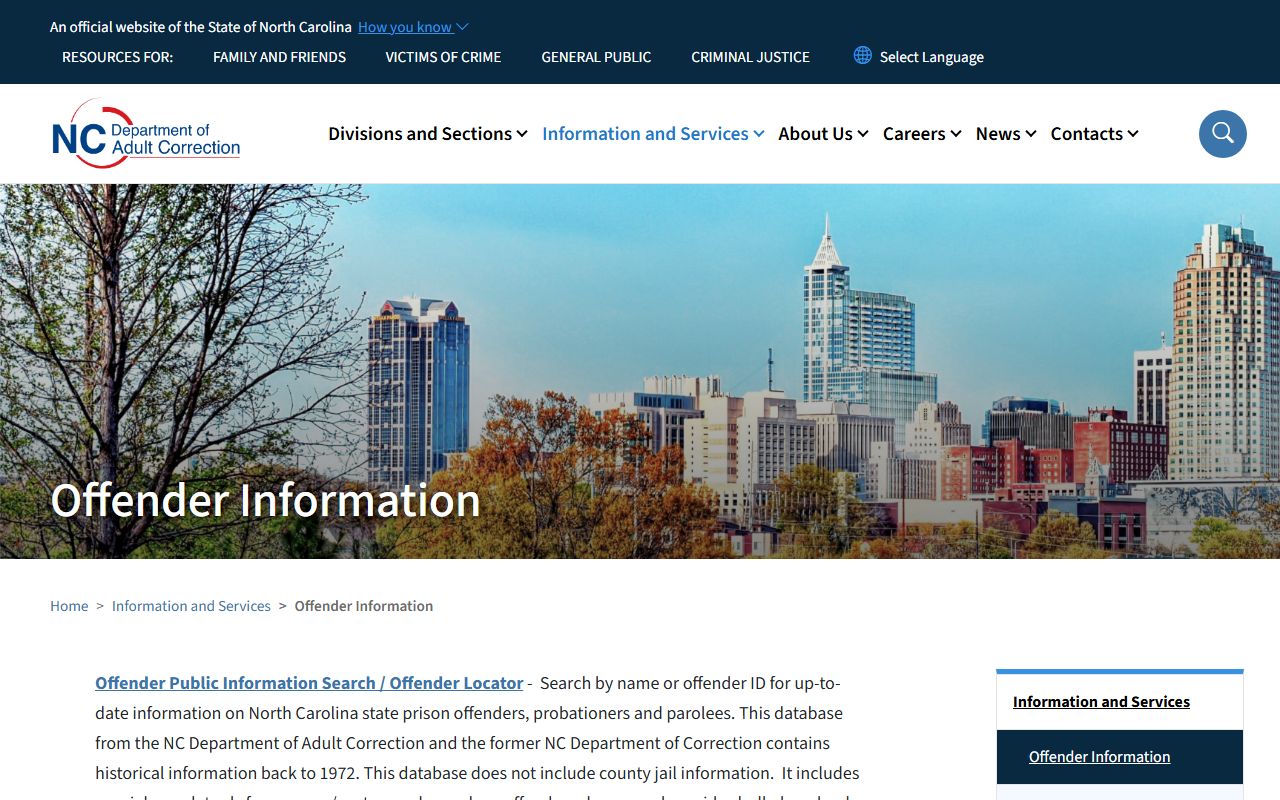
NCDAC covers state prison, probation, and parole records. Local criminal court records still come through eCourts and the clerk.
Search McDowell County Criminal Court Records
The public starting point is the North Carolina eCourts Portal. Use Smart Search for a defendant name, business name, case number, or supported text search. Narrow results to McDowell County where the location filter is available. Use criminal action filters and filing-date ranges when the result set is too broad. Open the case summary and register of actions to review charges, events, hearings, dispositions, and financial information.
- Search the eCourts Portal by defendant name or known case number.
- Filter by McDowell County, criminal action, case status, or filing date range when supported.
- Open the case summary and read the register of actions in date order.
- Check charges, pleas, dispositions, sentencing, bond, costs, and hearing entries separately.
- Request a clerk copy when a certified or complete file record is needed.
Portal is not the official background-check channel. The Judicial Branch court-records help topic directs background checks to the county clerk's office. State criminal justice records can also appear in NCDAC offender search for prison, probation, and parole, in VINE for custody or case notifications, and in the NCSBI sex offender registry for registered sex offenders. Those tools are related public-safety systems, not substitutes for the court case file.
McDowell County Criminal Case Flow
A criminal court record is built in stages. The court file may begin after arrest, citation, warrant, summons, indictment, or other charging process. The District Attorney decides how the prosecution moves forward. The Public Defender or appointed counsel may become involved when a qualifying defendant requests court-appointed representation. Each stage can leave a docket entry, order, hearing, financial entry, or disposition in the McDowell County criminal court record.
Case flow: Charges Filed › Arraignment › Pretrial / Motions › Plea or Trial › Disposition › Sentencing
| Stage | What Happens |
|---|---|
| Charges filed | The offense is filed by complaint, criminal summons, warrant, information, indictment, or related process. |
| Arraignment | The defendant is advised of the charge and enters or addresses a plea. |
| Pretrial / motions | Hearings, continuances, discovery issues, bond matters, and written requests may appear. |
| Plea or trial | The case may resolve by plea, trial verdict, dismissal, or other court action. |
| Disposition | The court records the outcome of the charge or case. |
| Sentencing | The court enters punishment, costs, restitution, probation, or other terms after conviction. |
The NCDAC public-records contacts image is assigned to this page because it helps distinguish state correction records from county court records.
For McDowell County charges, the court case record is still checked through the clerk and eCourts even when later custody or supervision data appears in NCDAC.
What McDowell County Criminal Records Show
McDowell County criminal court records can show the defendant, case number, charge list, statute or charge description, hearing history, courtroom events, pleas, disposition, sentence, costs, bond, and probation when those details are public. A case with several charges may have different outcomes for each charge. One count can be dismissed while another count results in a plea or verdict. That is why the field-by-field view matters.
| Field | What It Shows |
|---|---|
| Case number | The court tracking number, using the state case-number format. |
| Defendant | The person criminally charged, plus attorney information when public. |
| Charges | Offense descriptions, statutes or charge labels, severity, and later changes where listed. |
| Hearings | Dates, times, courtroom, judicial officer, and hearing type. |
| Plea | The defendant's formal response to a charge. |
| Disposition | The outcome, such as guilty, not guilty, dismissed, or another court result. |
| Sentence | Punishment imposed after conviction, including probation, custody, costs, or restitution when listed. |
| Financial information | Fines, costs, restitution, balances, and payment eligibility. |
A person who only needs the charge list after arrest may want the McDowell County arrest records and court charges page. The full criminal court record is broader because it follows the case through outcome and sentencing.
McDowell Charges vs Convictions
A charge is not a conviction. McDowell County criminal court records may show charges that are pending, amended, reduced, dismissed, or resolved by plea or trial. A conviction exists only after a guilty plea, guilty verdict, or other qualifying court result. This distinction is essential when reading a court file because an old charge can remain visible in public records even if the final disposition was not a conviction.
| Point | Charge | Conviction |
|---|---|---|
| Meaning | An accusation filed in court. | A finding or plea of guilt entered by the court. |
| Timing | Appears early in the criminal case. | Appears after plea, verdict, or judgment. |
| Record reading | Check later disposition before drawing conclusions. | Read sentence, costs, probation, and appeal or modification entries. |
| Public access | Often public unless sealed, juvenile, expunged, or restricted. | Often public unless sealed, expunged, juvenile, or otherwise restricted. |
Disposition terms should be read charge by charge. A single criminal case can contain several counts, and each count may have its own outcome. Bond and first-appearance information may also be present, but it does not prove guilt.
Public Access to McDowell Criminal Records
Public criminal court access in McDowell County rests on the same North Carolina framework as other court records. G.S. 7A-109 requires clerks to maintain court records and open them to public inspection during regular office hours unless another law says otherwise. G.S. 132-1 defines public records broadly. For returned criminal process, G.S. 132-1.4(k) says returned arrest and search warrants, indictments, criminal summons, and nontestimonial identification orders are public unless sealed.
Access channels include Portal Smart Search, Search Hearings, clerk inspection, courthouse public terminals where available, copy requests, and Remote Public Access for licensed users. Background checks should go through the clerk. Sheriff or police incident reports are separate law-enforcement records, and complete investigative reports may not be public outside criminal discovery.
Key Statutes:
G.S. 7A-109 requires clerk recordkeeping and public inspection unless access is restricted by law.
G.S. 132-1.4(k) treats returned criminal process as public unless sealed by court order.
State Criminal Record Systems
Some statewide systems answer questions that a McDowell County criminal court record does not. NCDAC offender search covers state prison offenders, probationers, parolees, and historical state records back to 1972, but the agency states that it does not hold local county or city jail records. North Carolina VINE provides custody status and criminal-case notifications. The NCSBI sex offender registry is a public search tool for registered sex offenders, not a complete criminal case database.
The assigned image from the NCSBI sex offender registry search documents one statewide criminal-record-related channel.
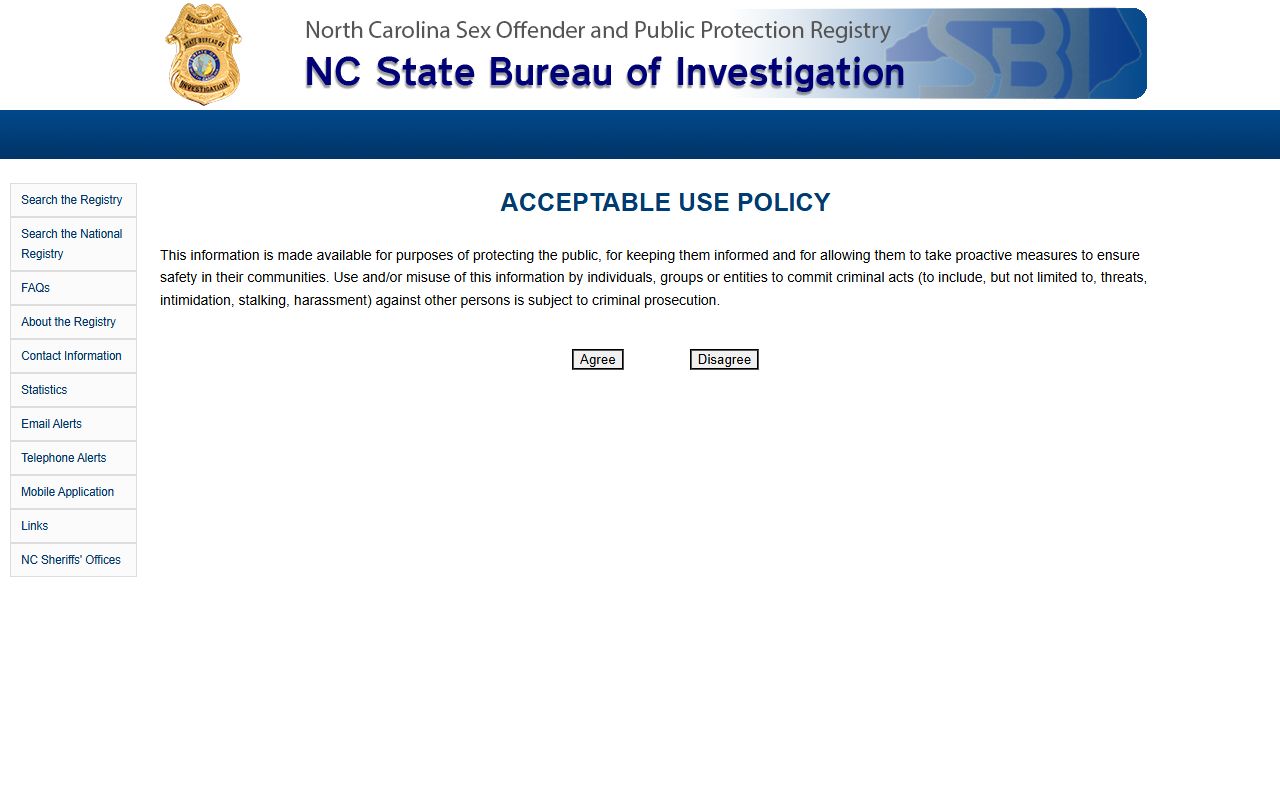
A registry result should be read as registry information. The McDowell criminal case file still comes from court records.
The NCSBI program page is also assigned to this criminal records page and explains the registry's public-search role.
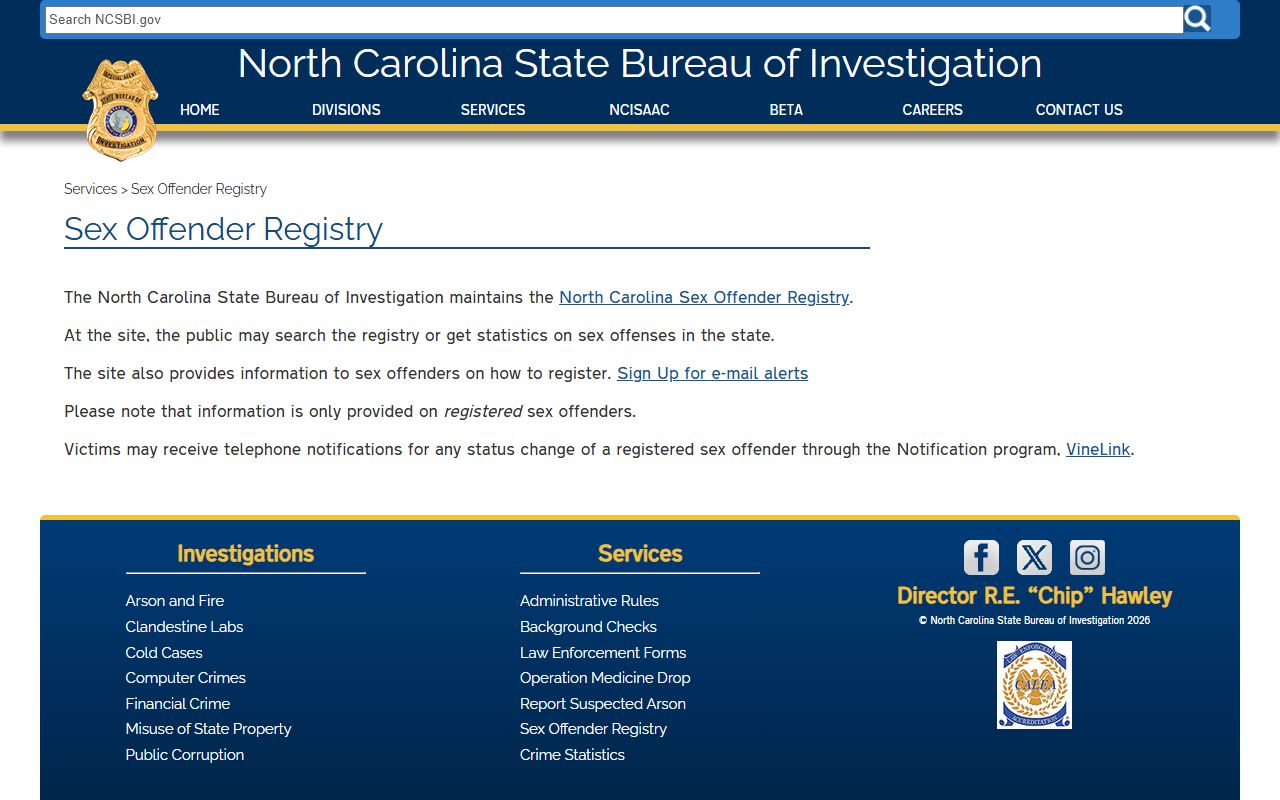
Registry status is only one kind of public criminal justice information, so it should not be treated as a full history search.
Sealed and Expunged Criminal Records
McDowell County criminal court records can be restricted by juvenile rules, expunction statutes, sealing orders, and confidentiality rules for some sensitive case types. G.S. 7B-3000 keeps juvenile court records from public inspection except as allowed by statute. G.S. 15A-151 makes expunction files confidential, with limited exceptions. A sealed record is closed from ordinary public view by law or order.
| Point | Sealed | Expunged |
|---|---|---|
| Visibility | Closed from ordinary public view by law or court order. | Treated as confidential under expunction law when relief is granted. |
| Public search | Should not be described as searchable in Portal. | Should not appear as an ordinary public case file. |
| Access | May require party status, legal authority, or court order. | Limited exceptions are controlled by statute. |
| Limits | Does not mean the case never existed. | May not remove every collateral consequence outside state systems. |
Do not assume that a missing Portal result means no criminal case ever existed. It may mean the case is restricted, sealed, expunged, non-digitized, older, or searched with the wrong name or case number.
McDowell Criminal Court Contacts
The Clerk of Superior Court is the records channel for McDowell criminal case files, certified copies, and background-check searches. The District Attorney for Prosecutorial District 41 prosecutes criminal cases for the State, prepares the criminal trial docket, and advises law enforcement officers in the district. The Public Defender for Defender District 41 can tell a person whether that office has been assigned as counsel.
Clerk of Superior Court
21 S Main St
Marion, NC 28752
(828) 655-4100
Monday-Friday, 8:30 a.m.-5:00 p.m.
District Attorney
Prosecutorial District 41
McDowell County Courthouse
(828) 655-4110
Important: Criminal records used for employment, tenant, credit, insurance, or licensing decisions require legally compliant screening channels.