
McDowell County Probate Records Overview
Probate in McDowell County means estate work through the Clerk of Superior Court. The estates process can include presenting a will, opening an estate, qualifying a personal representative, filing an inventory, filing accounts, seeking a year's allowance, using summary administration, or using a small estate process when the facts fit. The local office is the Clerk of Superior Court at the McDowell County Courthouse, and the statewide Judicial Branch estates topic supplies the main procedural frame.
Because probate is handled by the clerk, the record path looks more like a court-record request than a county vital-record request. eCourts may show public estate case information. The clerk can help with the local file, non-digitized estate materials, copies, and questions about whether a filing type belongs in estates or special proceedings. Marriage certificates and deed recordings remain with the Register of Deeds, but estate orders, letters, will filings, inventories, and accountings belong with the Clerk of Superior Court.
The North Carolina Judicial Branch estates topic is the state source for probate filing options.
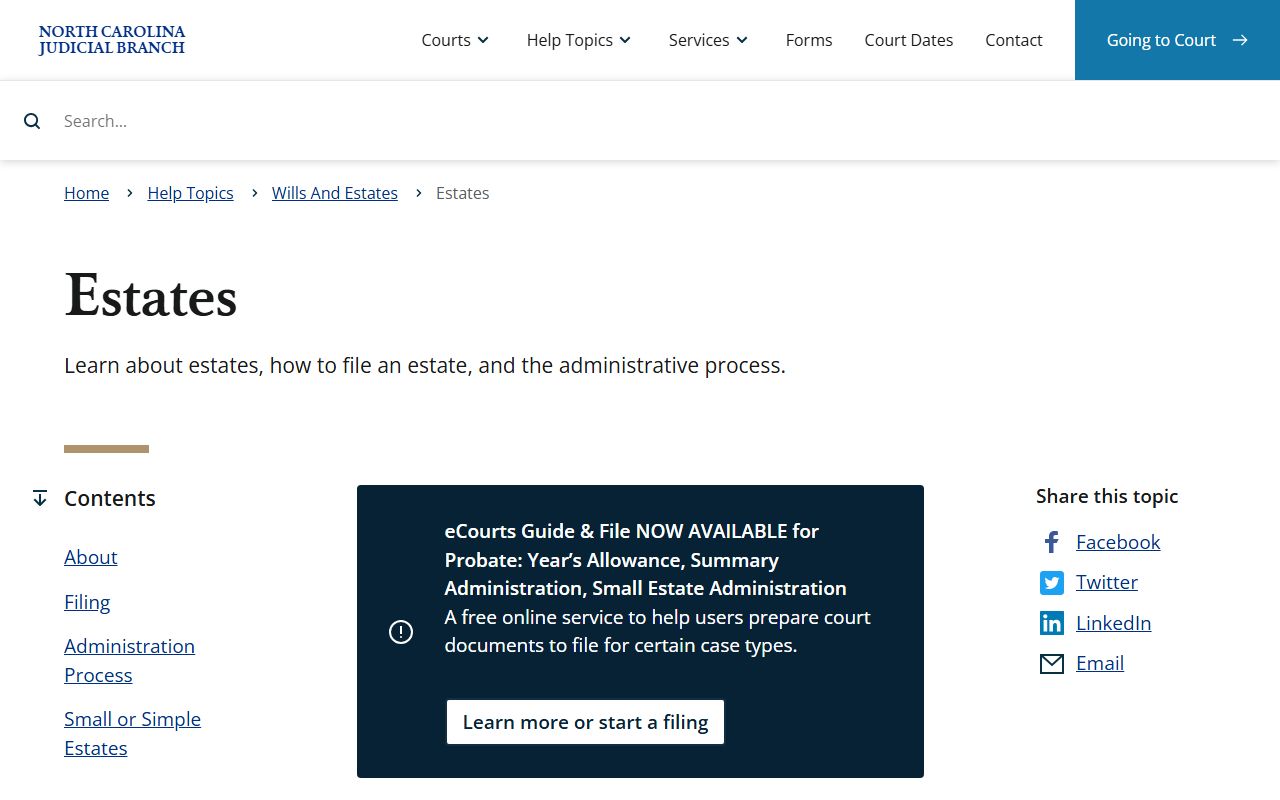
That statewide estates source is the right reference point because McDowell estate filings use North Carolina's clerk-led probate process.
McDowell Probate Terms Defined
Probate records use terms that can be hard to read if the file is old or if the estate has several heirs, creditors, and filings. These definitions keep the core words plain while matching the research. North Carolina materials may also use "personal representative" as a broad term for the person authorized to act for the estate.
- Testator
- A person who made a will before death.
- Executor
- A person named in a will to carry out the will and manage the estate after qualification.
- Intestate
- Dying without a valid will, so estate distribution follows North Carolina law.
- Guardianship
- A court-supervised process for a person who needs a guardian because of age, incapacity, or another legal reason.
- Conservatorship
- A protective financial-management concept; in North Carolina estate research, related issues are often discussed through guardianship or fiduciary authority.
Search McDowell County Probate Records
A McDowell County probate records search can start online, but it should not end there when a certified copy or complete file is required. The eCourts Portal Smart Search can include Estates as a case type, and public records may show a case summary, parties, causes of action, events, hearings, and financial information where public. The official court-records help page also says civil, special proceeding, and estates case information can be accessed on public self-service terminals in any county clerk's office.
- Search the North Carolina eCourts Portal by estate case number or by a decedent or party name if known.
- Filter location to McDowell County and case type to Estates when the portal options are available.
- Use filing date range or case status filters when the estate name is common or the opening date is only approximate.
- Visit or call the Clerk of Superior Court for file review, non-digitized records, and copies.
- Use the courthouse public terminal if the online result is incomplete or if a broader estates search is needed.
| Field Label | Type | Required | Options / Format Notes |
|---|---|---|---|
| Smart Search text | text | optional | Search by estate case number, party name, or decedent name where indexed. |
| Location | filter | optional | Use McDowell County. |
| Case type | filter | optional | Select Estates when available. |
| Case status | filter | optional | Open, closed, or other portal status where shown. |
| Filing date range | date range | optional | Useful when the approximate estate-opening date is known. |
McDowell County Estate Filing Options
North Carolina's Guide & File system is available for certain probate-related filings. The research identifies Year's Allowance, Summary Administration, and Small Estate Administration as supported probate workflows. These options are not a blanket substitute for legal advice or clerk review. They are online preparation paths for specific filing types, and the Clerk of Superior Court remains the local filing and records office for McDowell County estates.
A typical probate path starts by confirming that McDowell County is the proper filing county, contacting or visiting the Clerk of Superior Court, selecting the right process, filing the application or petition, paying the current estate filing costs, presenting a will if one exists, obtaining letters or clerk orders if appointed, and then handling notices, assets, creditors, inventory, accounts, and closing steps as required.
The Judicial Branch guardianship topic explains a related protective proceeding that may touch estate and fiduciary records.
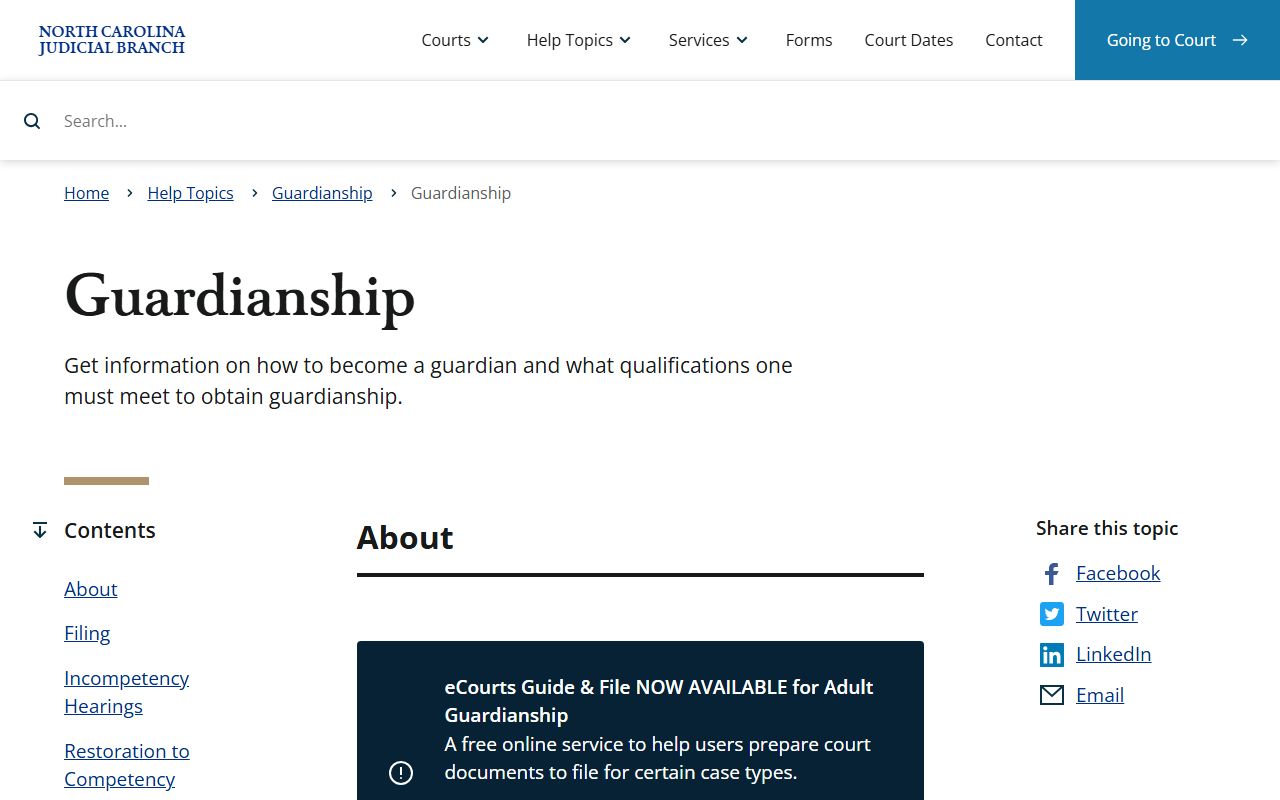
Guardianship can overlap with estate administration, but some guardianship details may be restricted from ordinary public access.
McDowell County Probate Office
There is one local probate access point identified in the research: the Estates Division of the Clerk of Superior Court. It is not a separate county probate court. Use the same courthouse contact for estate filings, will probate, inventories, accountings, estate copies, and questions about files that are not fully available online.
Estates Division of the Clerk of Superior Court
McDowell County Courthouse
21 S Main St.
Marion, NC 28752
(828) 655-4100
8:30 a.m.-5:00 p.m. Monday-Friday
McDowell County Probate Fees
The research points to the current Judicial Branch court-cost publications for exact estate filing amounts. Because those PDFs are updated by the state, the safest record page treatment is to name the source and avoid stale fee amounts unless they are confirmed from the current estate cost PDF. Clerk staff can also provide copies of court-file documents for a fee.
| Item | Amount or Source |
|---|---|
| Estate filing costs | Use the 2026 Estates Court Costs PDF from the Judicial Branch current court costs page. |
| Special proceedings costs | Use the current special proceedings cost PDF when the matter is filed that way. |
| Court-file copies | Clerk staff can provide copies for a fee. |
| Certified estate copies | Confirm the current copy and certification charge with the Clerk of Superior Court. |
What McDowell Probate Records Show
Public estate records can show the case summary or register of actions, decedent or estate case information, party information such as applicant, personal representative, heirs, and devisees where public, probate causes of action, case events, hearings, and financial information when applicable. The paper or electronic estate file may include a will, an application for probate or letters, oath, bond if required, letters testamentary or administration, inventory, creditor notices, accountings, receipts, orders, year's allowance records, and small estate affidavits.
| Record Field | What It Shows |
|---|---|
| Case summary | A register of actions showing estate events in order. |
| Estate case information | Decedent, case type, status, and filing details where public. |
| Party information | Applicant, personal representative, heirs, or devisees when public. |
| Case events | Applications, oaths, letters, inventory, accounts, orders, and closing activity. |
| Hearings | Scheduled hearing details if the estate matter requires one. |
| Financial information | Costs or other financial entries where available and public. |
The McDowell Register of Deeds recording fees and standards are separate from probate, but they can matter when estate work also requires recording land documents.
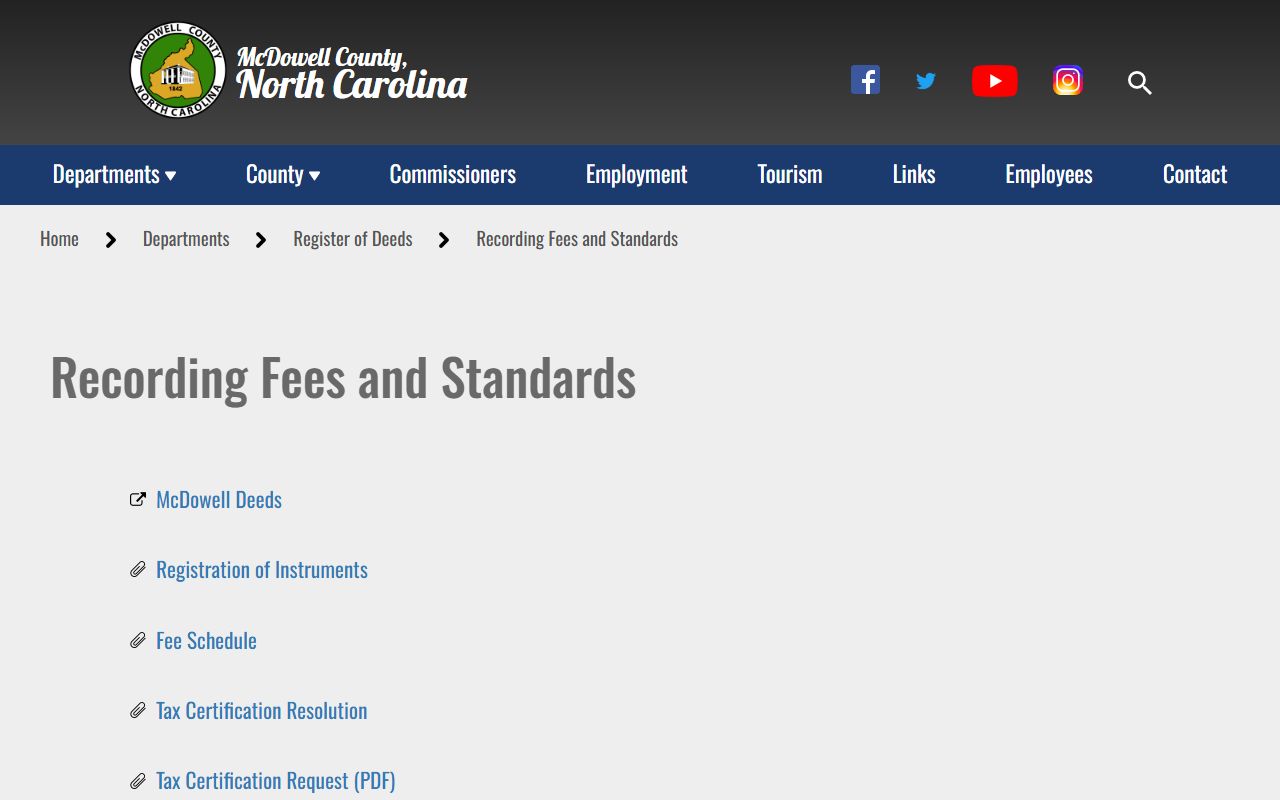
The image source reinforces the office split: estate records stay with the clerk, while deed recordings stay with the Register of Deeds.
Restricted McDowell Probate Records
Probate records are not all open in the same way. Guardianship, minor-related filings, sealed filings, mental health materials, personal identifiers, and sensitive financial or safety details may be restricted or redacted. The public eCourts result may show less than the clerk file, and the clerk file may still withhold non-public material. If a person needs access because of party status, fiduciary duty, agency authority, or a court order, the Clerk of Superior Court is the office to ask about the correct access path.
Bankruptcy is also separate from McDowell probate. A decedent's estate matter belongs in the state clerk-led estates process, while federal bankruptcy records are held by the U.S. Bankruptcy Court for the Western District of North Carolina. The Western District of North Carolina Bankruptcy Court is relevant only when the matter is a federal bankruptcy case.
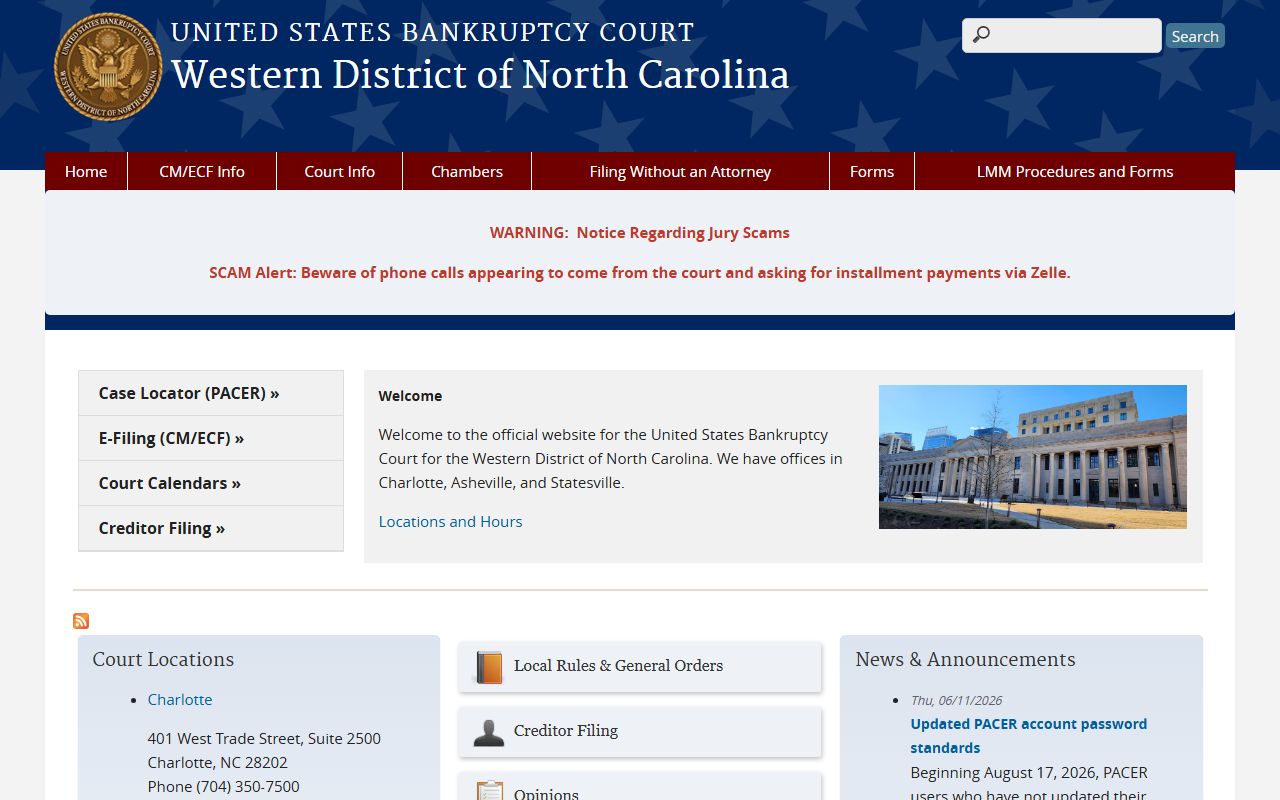
This distinction helps prevent a state estate search from being confused with a federal bankruptcy docket search.
Note: Probate file access can depend on the filing type, party role, and whether a court order restricts the record.